Structural Drying in Miami, FL
Water can remain inside flooring, walls, ceilings, subfloors, and other building materials even after visible standing water has been removed.
Rapid Dry Miami provides professional structural drying services to eliminate remaining moisture after flood damage, pipe bursts, appliance leaks, and severe weather intrusions.
The water is gone. Is your property actually dry? We deploy industrial dehumidification and precision moisture tracking to ensure complete structural dryness.
Concerned about trapped moisture in your Miami property? Call Rapid Dry Miami for structural drying.
Removing Water Does Not Mean the Structure Is Dry
When water intrudes into a building, what happens on the surface is only part of the story. Porous building materials absorb liquid rapidly through capillary action, pulling moisture deep into internal assemblies.
A floor or wall can feel completely dry to the touch on the surface while high concentrations of bound moisture remain trapped inside the material or sealed underneath it.
Moisture Progression in Building Assemblies:
Trapped moisture commonly lingers within:
- Damp flooring & underlayment: Trapped moisture beneath tile, hardwood, and vinyl planks.
- Wet subfloors: Saturated plywood, OSB, and concrete slabs holding bound water.
- Moist drywall & baseboards: Sheetrock drawing water upward through wicking action.
- Wall cavities & framing studs: Concealed dampness trapped between walls and insulation.
- Wet wall insulation: Fiberglass or cellulose batts retaining moisture out of sight.
- Damp ceilings & joists: Water traveling downward from upper leaks across floor joists.
- Carpet & padding: Saturated foam padding holding liquid beneath seemingly dry carpet fibers.
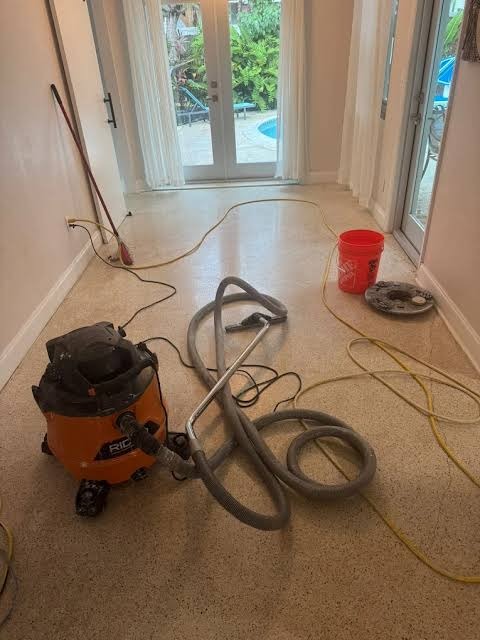
Industrial vacuum extraction pulling bound moisture from floor assemblies and subfloors.
What Is Structural Drying?
Structural drying is the scientific, controlled process of reducing remaining moisture from affected building materials and structural assemblies after water damage.
The Relationship Between Water Removal, Extraction, and Drying
Effective property restoration follows a distinct hierarchy of moisture mitigation:
Water Removal
Gets standing, pooled surface water out of the property using high-capacity pumps.
Water Extraction
Addresses liquid water absorbed or trapped within carpet, padding, and subfloors.
Structural Drying
Addresses remaining bound moisture inside walls, concrete, framing, and building cavities.
When Does a Property Need Structural Drying?
Any scenario where water has had contact with porous building materials warrants professional structural drying:
After Flood Damage
Floodwater leaves significant moisture trapped inside finished flooring, subflooring, wall studs, and insulation that cannot dry through simple natural ventilation.
After a Burst or Leaking Pipe
Pressurized plumbing failures discharge hundreds of gallons into wall cavities, ceilings, and under floors long before the leak is visibly detected.
After Appliance or Plumbing Leaks
Water heater ruptures, washing machine overflows, dishwasher leaks, and toilet overflows saturate surrounding cabinetry and subfloors.
After Storm or Hurricane Water Intrusion
Wind-driven rain penetrating roof flashings, window tracks, or exterior stucco saturates ceiling drywall, attic joists, and perimeter walls.
After Water Extraction
Even after heavy-duty vacuum extraction removes liquid water, materials remain damp and require industrial dehumidification to reach dry standards.
What Does Structural Drying Include?
Structural drying is an active technical service combining thermal diagnostics, controlled airflow, and industrial dehumidification:
Moisture Assessment
Utilizing non-invasive moisture meters and infrared thermal imaging to identify all damp structural assemblies.
Air Movement
Promoting high-velocity evaporation across affected surfaces using directional centrifugal and axial air movers.
Dehumidification
Removing evaporated water vapor from the indoor environment using low-grain refrigerant (LGR) dehumidifiers.
Drying Floors & Subfloors
Addressing trapped moisture within and beneath hardwood, tile, laminate, vinyl, and concrete subfloor systems.
Drying Walls & Cavities
Targeting moisture behind baseboards, inside wall framing cavities, and within drywall partitions.
Moisture Monitoring
Continuously tracking moisture levels and psychrometric readings to verify materials reach pre-loss dry standards.
Our Structural Drying Process
We execute an orderly 7-step drying process to ensure every affected structural component is thoroughly returned to dry standards:
Assess the Affected Areas
Conduct a complete diagnostic walkthrough to identify where water entered and map all structural materials holding moisture.
Check for Remaining Moisture
Look beyond surface appearance using precision moisture meters to detect bound moisture inside subfloors, walls, and trim.
Set Up the Drying Process
Strategically position high-velocity air movers and commercial LGR dehumidifiers to create balanced psychrometric drying conditions.
Dry Affected Materials
Focus directed airflow on flooring, walls, ceilings, and subflooring, continuously extracting moisture vapor from the air.
Monitor Moisture
Record daily moisture readings and adjust equipment placement to ensure steady drying progress across all materials.
Reassess the Property
Perform comprehensive verification readings to confirm that all structural assemblies have reached target dry standards.
Move Toward Restoration
Once structural components are certified dry, the property is cleared for any required finish repairs, baseboard reinstallation, and final restoration.
Where Can Moisture Remain After Water Damage?
Water spreads far beyond the original leak source, finding its way into concealed building assemblies where lack of natural airflow prevents evaporation.
Identifying and addressing these hidden moisture reservoirs is essential to preventing structural weakness and long-term damage:
- Under Flooring: Trapped beneath tile, luxury vinyl planks, and wood flooring.
- Inside Subfloors: Moisture absorbed into OSB, plywood, and concrete slabs.
- Behind Baseboards: Dampness holding along sill plates and bottom drywall edges.
- Inside Walls: Water wicking up sheetrock and framing studs inside wall cavities.
- Inside Insulation: Damp fiberglass or cellulose batts retaining moisture.
- Above Ceilings: Moisture filtering through floor joists from overhead pipe breaks.
- Under Carpet and Padding: Sponge-like foam underlayment holding gallons of liquid.
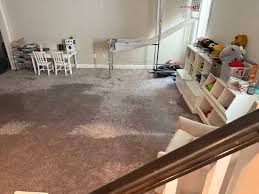
Moisture spreading beneath carpet fibers and saturating foam underlayment.
Structural Drying for Different Building Materials
Every construction material has unique porosity, permeability, and drying characteristics. We tailor our drying equipment grids specifically to the materials affected:
- Hardwood & Wood Flooring: Using specialized vacuum drying mats to draw bound moisture from wood boards and subfloors.
- Carpet & Padding: Deep weighted extraction followed by targeted sub-surface airflow to dry backing and pad.
- Drywall & Sheetrock: Directional air movement to evaporate wicked moisture from gypsum cores.
- Plywood & Concrete Subfloors: Commercial LGR dehumidification to draw moisture out of dense substrates.
- Wall Insulation: Assessing cavity batts to ensure framing dries completely.
- Cabinets & Built-In Vanities: Directing low-grain dry air into toe kicks and cabinet bases.
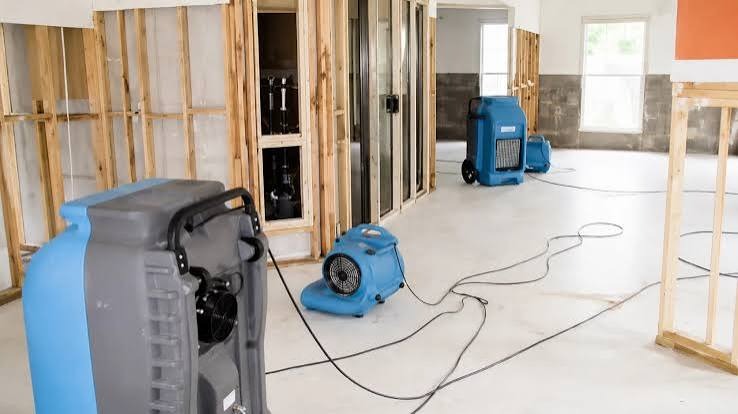
Targeted dehumidification and air movement for exposed framing studs and concrete slabs.
Signs Your Property Needs Structural Drying
If your home or facility experienced water damage, monitor for these indicators of lingering structural moisture:
Flooring Remains Damp
Hardwood, tile, or vinyl floors feeling cool or leaving moisture on socks.
Wet Carpet After Removal
Carpet fibers that continue feeling moist days after standing water was cleared.
Musty Lingering Smells
Persistent damp or sour odors in rooms despite using air fresheners.
Damp Drywall & Peeling Paint
Soft sheetrock, flaking paint, or bubbling wallpaper near baseboards.
Swollen Floorboards
Cupping or crowning hardwood and laminate planks with raised edges.
Persistent High Humidity
Indoor air feeling clammy with relative humidity levels exceeding 60%.
Structural Drying vs. Water Removal
Understanding the distinction between these core mitigation phases ensures a complete recovery:
Water Removal
Focuses primarily on extracting visible, standing pools of liquid water from floors using submersible pumps and wet vacuums.
Water Extraction
Focuses on pulling absorbed or trapped liquid water out of saturated carpet, padding, subfloors, and porous materials.
Structural Drying
Addresses the bound, deep moisture trapped inside structural materials and cavities, returning the building to dry equilibrium.
Structural Drying vs. Flood Cleanup
While flood cleanup focuses on removing physical silt, debris, and sanitizing surfaces, structural drying is the scientific remediation of bound moisture in building materials.
Flood Cleanup Focus
- Clearing flood silt, mud, and external debris
- Cleaning and sanitizing contaminated surfaces
- Removing unsalvageable porous items
- Preparing the space for drying equipment
Structural Drying Focus
- Eliminating moisture trapped deep inside drywall and framing
- Drying concrete foundation slabs and subfloors
- Lowering ambient humidity via LGR dehumidification
- Moisture mapping and verification of dry standards
Structural Drying After a Basement Flood
A flooded basement can retain moisture beneath flooring, inside walls, around stored belongings, and within cold concrete slabs long after standing floodwater has been removed.
Because basements lack cross-ventilation, industrial dehumidifiers and directed airflow are essential to extract bound moisture from lower levels. Learn more on our dedicated Basement Flood Damage Restoration Miami page.
Residential Structural Drying in Miami
A small plumbing leak or appliance overflow in a home can affect far more building material than the original wet spot suggests:
Single-Family Homes
Drying hardwood living areas, subflooring, wall cavities, and finished bedrooms.
Condominiums & High-Rises
Mitigating vertical water leaks filtering between concrete slabs and partition walls.
Kitchens & Bathrooms
Targeting trapped moisture behind vanity toe kicks, shower pans, and under cabinets.
Commercial Structural Drying in Miami
We deploy large-scale industrial drying grids for offices, retail stores, restaurants, warehouses, and commercial buildings to minimize business downtime and protect inventory.
For complete business flood recovery, visit our dedicated Commercial Flood Damage Restoration Miami page.
Structural Drying After Sewage Backup
Sewage intrusions require a two-phase protocol: complete biohazard extraction and sanitization first, followed by controlled structural drying of appropriate framing and subfloors.
Learn about our complete wastewater decontamination process on our dedicated Sewage Backup Cleanup Miami page.
Structural Drying Across Miami
Rapid Dry Miami provides structural drying services for properties across Miami, Miami Beach, Brickell, Coral Gables, Coconut Grove, Hialeah, Kendall, Doral, North Miami, and surrounding Miami-Dade County communities.
Structural Drying Across Miami-Dade
Commercial-grade dehumidification, moisture mapping, and structural drying for homes, condos, and businesses throughout Miami.
Areas We Serve
Select a Miami-Dade community below to view local flood restoration capabilities:
Miami
Flood cleanup and restoration for homes, condos, apartments, and businesses throughout Miami.
Serving Miami-Dade County
If your property has experienced flooding and your community isn't listed above, Rapid Dry Miami may still be able to help. Contact us to discuss your location and the type of flood damage affecting your property.
Need Flood Damage Restoration in Miami?
Call Rapid Dry Miami today for 24/7 assistance.
Why Choose Rapid Dry Miami for Structural Drying?
Eliminating trapped moisture requires precision diagnostic tools and commercial-grade dehumidification:
Focused on Remaining Moisture
Our service is engineered specifically to eliminate moisture that lingers long after standing surface water is removed.
Attention to Building Materials
Floors, walls, ceilings, and subfloors require tailored drying grids matched to their specific material densities.
Residential and Commercial Properties
We handle structural drying for private homes, condominiums, retail facilities, and large commercial spaces.
Moisture Assessment and Monitoring
We continuously test moisture content rather than relying on surface appearance to ensure genuine dryness.
Connected to the Restoration Process
Our drying protocol bridges the gap between water extraction and the final stages of property restoration.
Frequently Asked Questions
Answers to common questions about structural drying, moisture extraction, and building dehumidification in Miami.
Frequently Asked Questions About Flood Damage Restoration in Miami
Got questions about our services? Here are some common inquiries we receive from Miami-Dade property owners.
Need immediate emergency assistance?
(786) 434-061624/7 Live Operator • < 45 Min Dispatch in Miami-Dade
Structural drying is the scientific process of removing trapped and absorbed moisture from building materials—such as drywall, concrete slabs, wood framing studs, subfloors, and ceilings—after water damage or flooding. It utilizes commercial-grade dehumidifiers and high-velocity air movers to return materials to safe, pre-loss equilibrium moisture content.
Need Structural Drying in Miami?
Removing standing water is only one step after water damage. Moisture can remain inside flooring, walls, subfloors, ceilings, and other building materials.
Call Rapid Dry Miami to assess remaining moisture and begin the structural drying process.